I’ve Suffered a Work Injury, Should I Call an Attorney?

I’ve Suffered a Work Injury, Should I Call an Attorney?

Workers Comp Attorney

At Mays Law Office, Attorney Lisa Pierobon Mays is always happy to talk to injured workers at any point in the workers compensation process.  However, there are crucial moments when an injured worker should absolutely call an attorney about their injury.  These moments include:

Call Attorney Pierobon Mays if your employer does not believe that you were hurt on the job or refuses to file the accident claim with their workers compensation carrier.  In those situations, Attorney Pierobon Mays will guide you on how you can file the work injury claim on your own with your employer’s workers compensation insurance carrier.  In Wisconsin, employers are required by law to inform their insurance carriers of injuries that occur on the job or because of the job.

Call Attorney Lisa Pierobon Mays if your employer or the workers compensation insurance adjuster is dictating who and where you go for medical treatment after a work injury occurs. In Wisconsin, injured workers are allowed to choose their own medical practitioner.  Employers and the insurance carrier like to suggest where to go for treatment, but you cannot be forced to accept their recommendations.  Regardless of where you go for medical treatment, the workers compensation insurance carrier is required to pay for your medical treatment.

Call Attorney Lisa Pierobon Mays if your employer fires you for reporting a work injury. In Wisconsin, employers are not allowed to penalize you for claiming an injury or filing a work injury.  Being terminated will not prevent the injured worker from receiving their workers compensation benefits.  The employer’s carrier will still be responsible for covering lost time benefits and medical bills.  In those situations, Attorney Pierobon Mays will advise you how to discuss the employer’s behavior with the insurance adjuster because employers who behave this badly are likely not being honest with their insurance companies about you and your work injury.

Call Attorney Lisa Pierobon Mays if two weeks have passed since your work injury was reported and you have not received lost time benefits or your medical bills are not being paid. In Wisconsin, the workers’ compensation carrier must be diligent in investigating your claim of injury. If more than two weeks pass without word from the carrier, then call Attorney Pierobon Mays for assistance as your claim is likely being denied.

Call Attorney Lisa Pierobon Mays if you medically cannot work and now the workers compensation carrier is not paying you a lost time benefit.  Insurance adjusters cannot deny lost time benefits without a factual or medical basis.  They must have factual or medical support from a medical doctor to not pay you your lost time benefit.  In fact, not paying you without a factual or medical basis can give rise to a penalty claim.

Call Attorney Lisa Pierobon Mays before going to any doctor appointment organized by the workers compensation carrier, often termed an “Independent Medical Examination.”  These appointments are not independent but rather adverse to you and paid for by the insurance company, hoping to get the doctor to deny your claim and deem it not work-related. Attorney Pierobon Mays will guide you on how to behave, suggest that you take a witness, what to document, and what to say and not say at this appointment.  Also, the carrier is required to pre-pay your roundtrip mileage before, not after, the appointment.  If not, there are consequences for the insurance carrier.

Call Attorney Lisa Pierobon Mays if the workers compensation doctor disagrees with your doctor and the insurance company stops paying for your medical treatment.  When this happens, a dispute has arisen, and you need to hire a workers compensation attorney to help fight for the recovery of benefits.

Call Attorney Lisa Pierobon Mays if the workers’ compensation carrier, or their attorney, wants you to sign a document for the release of your medical information.  In Wisconsin, the Department of Workforce Development has very specific approved forms for the injured worker to sign that allows the insurance carrier to access your relevant medical information.  It is ridiculous when insurance companies want access to your dental or mental health records for a shoulder or knee injury.  Attorney Lisa Pierobon Mays will be happy to provide a copy of the appropriate release you need to sign for releasing your medical records to the workers compensation insurance.

Call Attorney Lisa Pierobon Mays if the workers compensation carrier wants you to sign a document in exchange for a money settlement.  NEVER, NEVER sign anything before talking over the specific details of your workers’ compensation claim with Mays Law Office.  Doing so, you might be waiving future workers compensation benefits.  Attorney Lisa Pierobon Mays will review the value of your claim and indicate when/if you should settle your work injury claim.

Call Attorney Lisa Pierobon Mays if you have physical restrictions from your doctor that allows you to do some level of work but the employer refuses to offer accommodating work and now the workers compensation insurance is not paying you a lost time benefit.  When this occurs, there’s some level of miscommunication between the employer and the insurance carrier, or perhaps your claim has been denied for workers compensation benefits.  Attorney Lisa Pierobon Mays will guide you on how to communicate with the carrier and get some clarity on their position.  If a denial, then it is time to hire an attorney.  Mays Law Office specializes in advocating for injured workers.

Call Attorney Lisa Pierobon Mays if your injury is so severe and you have concerns that you will never be well enough to return to the same type of employment.  Wisconsin law includes benefits that consider scenarios like this called vocational claims.  If your injury causes permanent physical restrictions that prevent you from returning to work and making the same rate of pay, then a claim for retraining or in some situations, loss of earning capacity may apply.  These are valuable but complex claims that require an attorney’s assistance.  Attorney Lisa Pierobon Mays represents only Wisconsin injured workers.

Always feel welcome to call Mays Law Office if you have questionsAttorney Lisa Pierobon Mays is a Wisconsin attorney that concentrates her law practice on representing only injured workers.  You will work with an attorney at Mays Law Office, not a paralegal or legal assistant.  Mays Law Office has a 5.0 Star Rating from Google based on client reviews.  This is not an easy rating that Google gives out and one that we are extremely proud of because it exemplifies the lengths we go to achieve good results for our clients.

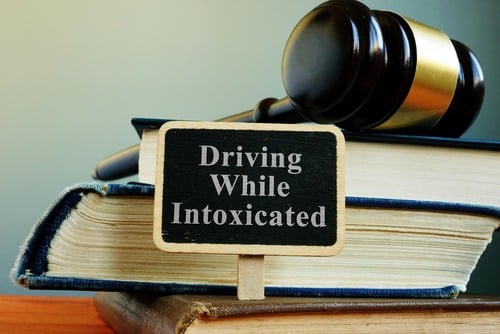
Can You Be Convicted of DUI in Wisconsin if You Refused the Breathalyzer?

Can You Be Convicted of DUI in Wisconsin if You Refused the Breathalyzer?

If the police stopped you on suspicion of drunk driving and you took the breathalyzer on the side of the road, there is a good chance that prosecutors will be able to use your blood alcohol concentration (BAC) reading against you. Unless the police violated your rights during your traffic stop or you can show that your BAC reading is invalid, prosecutors can most likely use it against you in court.

But, what if you refused the breathalyzer?

While Wisconsin’s “implied consent” law requires drivers to take the breathalyzer (provided that the police comply with the law’s requirements), some people don’t know this law exists, and some people refuse the breathalyzer for other reasons. If you refused the breathalyzer—and prosecutors don’t have your BAC to present as evidence in court—can you still be convicted of DUI?

Understanding What Happens When You Refuse the Breathalyzer During Your DUI Stop in Wisconsin

The short answer is, “Yes.” This is due to the language of Wisconsin’s DUI law. Under Section 346.63(1) of the Wisconsin Statutes, prosecutors have two ways to prove that a driver was drunk behind the wheel.

The first way prosecutors can prove a DUI case is by showing that the driver was over the legal limit. Section 346.63(1)(b) provides that:

“No person may drive or operate a motor vehicle while . . . [t]he person has a prohibited alcohol concentration.”

What does it mean to have a “prohibited alcohol concentration”? This term is defined in Section 340.01(46m) of the Wisconsin Statutes:

“Prohibited alcohol concentration” means one of the following . . . If the person has 2 or fewer prior convictions, suspensions, or revocations. . . an alcohol concentration of 0.08 or more[; or,] [i]f the person is subject to an [ignition interlock device order] or if the person has 3 or more prior convictions, suspensions or revocations . . . an alcohol concentration of more than 0.02.”

So, as you can see, a DUI charge under Section 346.63(1)(b) requires evidence of the driver’s BAC. In fact, a DUI charge under this section is based entirely on the driver’s blood alcohol concentration at the time of his or her arrest. If you are driving with a prohibited alcohol concentration (i.e., a BAC of 0.08 percent or above), this is all prosecutors need to prove that you are guilty of DUI.

Now, let’s take a look at the second way prosecutors can prove a DUI case in Wisconsin. Section 346.63(1)(a) states:

“No person may drive or operate a motor vehicle while . . . [u]nder the influence of an intoxicant . . . to a degree which renders him or her incapable of safely driving . . . .”

This form of DUI does not require evidence of the driver’s blood alcohol concentration. Under Section 346.63(1)(a), if prosecutors can show that you were drinking and that this rendered you “incapable of safely driving,” then it doesn’t matter whether your BAC was over the legal limit at the time of your arrest.

How can prosecutors prove that you were under the influence of alcohol if they don’t have your BAC from the breathalyzer? Depending on the circumstances of your case, prosecutors may be able to use a variety of forms of evidence to prove that you are guilty. For example, in many cases, prosecutors will be able to use evidence such as:

  • An open container in the vehicle
  • The driver’s admissions to the police
  • The driver’s performance on the field sobriety tests (FSTs)
  • The arresting officer’s testimony regarding the driver’s behavior or appearance
  • Dash camera or traffic camera footage

Again, these are just examples. Since prosecutors don’t need your BAC to prove that you were driving drunk, even if you refused the breath test, it is still extremely important that you discuss your case with an experienced DUI defense lawyer as soon as possible. If prosecutors have other evidence against you, they may still be able to secure a conviction—and, if so, you are still at risk for substantial penalties.

What Are the Consequences of Refusing a Breath Test in Wisconsin?

Since prosecutors can prove a DUI case regardless of whether they have the driver’s BAC reading, does it really matter whether you refused the breathalyzer during your DUI stop? One again, the short answer is, “Yes.” There are two very important reasons why:

1. “Implied Consent” Violations Carry Substantial Penalties in Wisconsin

First, “implied consent” violations carry substantial penalties under Wisconsin law. Since this violation relates to your breathalyzer refusal—not your actions behind the wheel—you can face these penalties regardless of whether you were driving drunk. In Wisconsin, the penalties for first-time “implied consent” violations include:

  • A 12-month driver’s license suspension
  • A 30-day waiting period before you can apply for an occupational license
  • Mandatory installation of an ignition interlock device for 12 months

2. Prosecutors Can Use Your Refusal Against You in Your DUI Case

Second, while prosecutors won’t be able to rely on your BAC if you refused the breathalyzer, they will be able to rely on your refusal. Under Wisconsin’s “implied consent” law, refusing the breathalyzer creates an inference that you knew you were driving drunk. While it may be possible to overcome this inference by arguing that you refused the test for other reasons (i.e., you didn’t understand the test was mandatory or you were worried about a “false positive”), there are never any guarantees in court.

Discuss Your Case with an Experienced Wisconsin DUI Defense Lawyer in Madison

If you are facing a DUI charge in Wisconsin after refusing the breathalyzer during your traffic stop, it is important that you discuss your case with an experienced defense lawyer as soon as possible. We offer free initial consultations, and we can explain everything you need to know about fighting your DUI (and your “implied consent” violation). To speak with a Wisconsin DUI defense lawyer in Madison as soon as possible, call 608-291-7609 or tell us how we can reach you online now.

My Claim’s Adjuster Says I Don’t Need an Attorney for my Workers Compensation Injury.  Is That True?

My Claim’s Adjuster Says I Don’t Need an Attorney for my Workers Compensation Injury.  Is That True?

Workers Comp Lawyer

While the workers’ compensation system was originally developed in Wisconsin to relieve the worker from the cost of hiring an attorney, that only applies to claims in a “perfect world” setting.  A “perfect world” where the insurance company has conceded or accepted the injury claim and the injured worker is getting ALL the benefits that he is entitled too, without argument, delay, or hassle from the workers compensation insurance carrier.

Rarely does this “perfect world” happen when a Wisconsin worker is injured.  The insurance company always has an eye out to deny the claim, lessen its exposure, and responsibility.  With that mindset, the insurance company looks for reasons to not pay, delay, and ultimately deny.  They have many tricks up their sleeves to either never pay or stop benefits.  They may claim that the injury never occurred at work, or that the injury is personal to you and not related to what happened on the job.  Or they may claim you did not report the injury timely, or that your rendition of how the injury occurred is a lie.  Sometimes, they just ignore you and don’t even respond to your report of injury hoping you will just go away.  Mays Law Office has seen and heard it all from workers compensation insurance carriers.  When hiring an attorney, make sure you are choosing an attorney who has years of experience advocating for injured Wisconsin workers to ensure that you are getting every benefit you are entitled to under the law.

Even if you are not quite ready to hire an attorney, at the very least, make a call to Mays Law Office for a free consultation to discuss with Attorney Lisa Pierobon Mays if you are being treated fairly and legally by the insurance company and getting EVERY monetary benefit under the law.

During most consultations, Attorney Pierobon Mays can spot concerning issues, such as advising on benefits not told to you by the insurance company.  For example, an injured worker is entitled to medical mileage reimbursement for treatment, therapy, and pharmacy runs at .51 cents a mile.  Most insurance carriers will not tell the injured worker about such reimbursement.  The injured worker simply needs to make the request for reimbursement by indicating the date and address traveled to determine mileage and the insurance adjuster has to pay.  Or perhaps, the injured worker is having her privacy violated by a workers compensation nurse showing up at her appointments and going into the examination room with her and the doctor!  Attorney Pierobon Mays will caution that the injured worker can deny such access and forbid this intrusion.  Or, oftentimes, the injured worker does not know that they get to choose their own doctor; the workers compensation representative cannot dictate medical treatment.  In Wisconsin, the injured worker chooses who they will treat with.

Often time, Attorney Lisa Pierobon Mays get calls from injured workers because they have been given notice that they must go see the workers compensation insurance doctor, termed “Independent Medical Examiner” or an “IME.  Ironically, there is nothing independent about these doctors.  These doctors are hired by the workers compensation insurance companies making thousands of dollars to help the insurance carrier review claims with a bent toward denying benefits.  These doctors do not provide medical treatment.  They see you for 15-30 minutes, at a rented facility, and ask you a few questions, all in the hopes that you will say something inconsistent or give them a bit of information to use against you.  Like, when one injured worker told the doctor that before the injury he enjoyed weight lifting.  The alleged “Independent Medical Examiner” then used this information about weightlifting to proclaim that this caused the injury and NOT the lifting of the 100 pound machine at work which caused him to drop to his knees screaming in pain.

During your initial consultation and conversation with Attorney Lisa Pierobon Mays, she will spot these troubling issues and guide you accordingly.  Such as how to interact and communicate with these IME doctors.  Attorney Pierobon Mays will quickly correct that this doctor’s appointment should be seen as an “adverse medical doctor” and not your friend or advocate.  These doctors have an understood job to act in favor of the worker’s compensation carrier which is generally not in line with an injured worker’s interest in collecting benefits.  So, while you may be getting benefits now, it is always good to have a familiar voice to call on in the event the insurance company tells you that it wants you to see their doctor/IME.  Establishing a relationship with an experienced Wisconsin worker’s compensation attorney early on will give you confidence.  Confidence that if in the future you need to hire an attorney then you have already established a relationship with Mays Law Office and confident in hiring them to advocate and collect for you.

If ultimately you do need to hire an attorney, under Wisconsin law, workers’ compensation lawyers can ONLY charge up to 20% of the amount of recovered compensation.  This attorney fee is simply deducted from your payment; therefore you do not pay attorney fees until you receive compensation for your injury or illness.  At Mays Law Office, we offer free consultations, often on the same day that you call.

Nothing can compensate you for the pain and suffering you have endured following a work-related injury, however receiving the workers compensation benefits that you are entitled to is an important step on the way back to recovery.  Lisa Pierobon Mays can help guide you through the Wisconsin workers’ compensation system, working to ensure that you file the necessary paperwork within each specific time frame.  Lisa stays involved with your claim from the moment you speak with her.  She does not turn your claim over to a paralegal to handle your claim.  Lisa stays in direct contact with you from your first contact, through your doctor appointments, to preparing your claim and you for a potential hearing, often pushing the workers compensation insurance company to make a fair settlement or defend itself at the hearing.

Lisa is not intimidated by any employer or insurance company.  She has taken on the big box retailers and nationally recognized insurance companies in advocating for her clients.  See the Mays Law Office 5-Star Google customer review rating.  Those kinds of reviews and results tell it all.

For more information about how we can help now or in the future, contact Attorney Lisa Pierobon Mays at 608-257-0440 for a free consultation.

What Happens if You Get in an Accident While Driving Drunk in Wisconsin?

What Happens if You Get in an Accident While Driving Drunk in Wisconsin?

In Wisconsin, the consequences of getting arrested for drunk driving can be severe. Even “standard” first-time drunk driving charges carry substantial penalties, and having a conviction on your record for operating a motor vehicle while intoxicated (OWI) can negatively impact many aspects of your life.

But, the consequences are even more severe if you cause an accident while driving drunk.

If you cause an accident while driving drunk, the penalties that are at stake depend on the consequences of the accident. Wisconsin law establishes three separate offenses for OWI accidents: (i) causing injury while OWI; (ii) causing great bodily harm while OWI; and, (iii) homicide by OWI. These are felony charges in many cases, and convictions carry mandatory jail time.

Criminal Charges for OWI Accidents in Wisconsin

Each of these offenses carries its own set of penalties, and each offense has its own “elements” that prosecutors must prove in order to secure a conviction. Here is an overview of the charges you may be facing if you have been accused of causing a serious or fatal accident while driving drunk in Wisconsin:

1. Causing Injury While OWI

Causing an accident that results in any level of injury elevates the risks of facing an OWI charge in Wisconsin. If convicted, you could face a $2,000 fine and up to a year of jail time—with a mandatory minimum sentence of 30 days.

2. Causing Great Bodily Harm While OWI

If the accident results in “great bodily harm,” you can be charged with a Class F felony. These felonies carry up to a $25,000 fine and 12.5 years of imprisonment.

What constitutes “great bodily harm”? Section 939.22(14) of the Wisconsin Statutes defines “great bodily harm” as “bodily injury which creates a substantial risk of death, or which causes serious permanent disfigurement, or which causes a permanent or protracted loss or impairment of the function of any bodily member or organ or other serious bodily injury.” As you can see, this is extremely broad, and this breadth allows prosecutors to pursue Class F felony charges in many cases.

3. Homicide By OWI

If you are involved in a fatal accident while driving under the influence, you can be charged with homicide by OWI. Under Section 940.09 of the Wisconsin Statutes, homicide by OWI is a Class D felony in most cases. However, it can be elevated to a Class C felony for individuals who have prior criminal records. As a Class D felony, homicide by OWI carries up to a $100,000 fine and 25 years of imprisonment. Repeat offenders facing Class C felony charges can be sentenced to as many as 40 years behind bars.

Defending Yourself Against an OWI Accident Charge in Wisconsin

Due to the severe consequences of getting convicted of causing injury or death while driving under the influence in Wisconsin, if you are facing an OWI accident charge, you need to defend yourself by all means available. This starts with putting an experienced OWI defense lawyer on your side. When you hire an experienced lawyer to represent you, your lawyer will examine all potential defenses and put together a trial strategy focused on protecting you to the fullest extent possible.

While there are several potential defenses to OWI accident charges in Wisconsin, the defenses you have available will depend on the facts of your case. With this in mind, some examples of defense strategies your lawyer might be able to use to protect you include:

  • Challenging the Prosecution’s Evidence that You Caused the Accident – Even if you were involved in an accident while driving drunk, this doesn’t necessarily mean that you caused the accident. If prosecutors cannot prove that you caused the accident, then you do not deserve to be held accountable for any serious or fatal injuries that resulted from the collision. Since the prosecution has the burden of proof, you don’t need to be able to prove that the accident was someone else’s fault—you just need to be able to convince the jury that prosecutors haven’t proven that you caused the accident beyond a reasonable doubt.
  • Challenging the Prosecution’s Evidence that You Were Intoxicated or Impaired – Your lawyer may also be able to fight your OWI accident charge by challenging the prosecution’s evidence that you were intoxicated or impaired. There are several ways to fight an “ordinary” OWI charge, and all of these are potential defenses to OWI accident charges as well.
  • Challenging the Admissibility of the Prosecution’s Evidence – Even if the evidence shows that you caused an accident while driving drunk, prosecutors still won’t be able to secure a conviction if their evidence is inadmissible in court. If you have grounds to keep the prosecution’s evidence out of court (i.e., because the police violated your Fourth Amendment rights), this could save you from a conviction as well.
  • Asserting Other Constitutional and Procedural Defenses – Along with challenging the admissibility of the prosecution’s evidence, there are several other potential constitutional and procedural defenses to OWI charges filed in the Wisconsin courts. If prosecutors violate your right to a speedy trial, if there are issues with the jury selection process, or if any of a variety of other issues arise during your case, these could all potentially serve as grounds for acquittal.
  • Negotiating a Plea Bargain if Necessary – Finally, if the cards are stacked against you, you may be able to minimize the consequences of your OWI accident by negotiating a plea bargain. Your lawyer can help you decide if this is in your best interests; and, if it is, your lawyer can negotiate with the prosecutor’s office on your behalf.

Discuss Your Wisconsin OWI Accident Case with an Experienced Defense Lawyer

Are you facing an OWI accident charge in Wisconsin? If so, we encourage you to contact us promptly for more information. To discuss your case with an experienced defense lawyer in confidence as soon as possible, call 608-302-6614 or tell us how we can reach you online now. 

LPM Win for Client

LPM Win for Client

LIsa Mays Workers Comp Madison WI

Attorney Lisa Pierobon Mays WINS Workers Compensation Benefits for her Client at Hearing.

Mr. AH worked as a mechanic of heavy-duty equipment, repairing forklifts and excavators for over 4 years.  In doing this job, he used his hands and arms constantly to lift, pull, push, grip, and grasp.  He used heavy tools and handled parts up to 300 lbs.  Often solo on the job, Mr. AH used his upper extremities, repetitively, in awkward positions and spaces.  As the lead technician, he was considered by his employer as the guy who got the job done.

In 2020, Mr. AH started feeling increasing fatigue, pain, numbing, and radiating pain up his arms and down into the tips of his finger.  The pain became unbearable, so he informed his employer of his symptoms.  Mr. AH sought medical treatment.  At first the workers compensation carrier accepted responsibility for AH’s injury occurring at work.  Mr. AH underwent two carpal tunnel surgeries to his hands, but symptoms persisted to his forearms with pain radiating requiring ongoing restrictions and medical treatment.

Fearing higher financial exposure in Mr. AH’s workers compensation claim, the workers compensation insurance carrier sent AH to their Medical Examiner to conduct a Record Review to determine if the injury is work-related.  A Record Review involves reviewing an injured workers medical record, without a personal examination, in order to make a medical determination.  The Medical Examiner determined that the pain symptoms in AH’s forearms were not related to the work activity, and that Mr. AH suffered no disability to his hands despite undergoing carpal tunnel surgeries on both hands.  This Adverse Examiner opined that the forearm pain developed in a degenerative type fashion that was personal to him which could occur even in the absence of significant exposure to high-force torquing and gripping activities.   

Mr. AH sought out and hired Mays Law Office to fight for his denied workers compensation benefits.  In doing so, Attorney Pierobon Mays went to work immediately and got a supporting medical report from AH’s Neurologist who assessed permanent physical restrictions and disability to Mr. AH’s hands and forearms.  Attorney Pierobon Mays filed appeal paperwork with the Department of Workforce Development claiming that Mr. AH suffered a compensable occupational injury to both his hands and arms at the elbows.  Attorney Pierobon Mays also made a claim for Retraining on behalf of AH as his date-of-injury employer terminated him due to the work injury.  With permanent disability and physical restrictions to his hands and forearms, Mr. AH was unable to find comparable paying work and needed to be retrained in order to find comparable paying work.     

As the date approached for the Hearing, Opposing Counsel expressed frustration in her client, the workers compensation insurance carrier, for extending no more than a minimal settlement offer leaving Mr. AH with no choice but to go to hearing.  In pushing Mr. AH to a hearing, Attorney Lisa Pierobon Mays hit her opponent right back.

*Attorney Pierobon Mays refused to allow Mr. AH to attend a requested medical visit with the workers compensation carrier’s Medical Examiner because the deadline period had passed.  This left Opposing Counsel with nothing more than an outdated Record Review Report that lacked a full analysis of all of Mr. AH’s medical treatment records.  This record review was sorely lacking in credibility in contrast to the end-of-healing Report authored by Mr. AH’s Neurologist. 

*Attorney Pierobon Mays also pointed out at hearing that even the workers compensation Medical Examiner agreed, in his albeit old Record Review Report, that the American Medical Association attributes injuries, like those to Mr. AH’s hand and forearms, from the kind of work that AH did for the employer;

*Attorney Pierobon Mays also illuminated multiple medical records that clearly explained Mr. AH’s pain symptoms that the workers compensation carrier missed in his analysis. 

*Lastly, Attorney Lisa Pierobon Mays prepared Mr. AH well for the hearing where she elicited descriptive testimony from Mr. AH as to the intensity of his work exposure over a 3-year period from 2016 to 2020.

All this deflated opposing counsel who asked no more than 10 questions of Mr. AH on cross-examination, who was well-prepared for any hardball questions. 

The Administrative Law Judge ruled in favor of Mr. AH finding that there was no dispute that he had significant exposure to repetitious high-force torquing and gripping activities during the course of his job duties with the employer.  The Judge also found that the opinions of AH’s Neurologist were consistent with AH’s testimony and the medical evidence and credited his opinion on causation.  In finding such, the Judge awarded Mr. AH benefits for permanent partial disability to both hands and elbows/forearms, all his lost time/wage benefits for missing work while on restrictions, and all his medical treatment and medical mileage.  The issue of Retraining will be determined at a future hearing.    

Attorney Lisa Pierobon Mays is very proud of the win that she achieved for her client, AH.  Attorney Pierobon Mays will not force a settlement on her client’s that is not fair, justified, and well-based.  In Mr. AH’s case, Attorney Lisa Pierobon Mays knew the strength of AH’s case and was confident in her abilities to win a favorable result for him at the administrative hearing.  Attorney Lisa Pierobon Mays handles every single one of her workers compensation cases from the beginning paperwork through and to a hearing or settlement.  Her clients are never shuffled to a paralegal to answer their questions.  Consultations are free and calls usually returned the same day.

Mays Law Office has the coveted 5-star Google rating which is based on favorable reviews from actual clients.   A rating like this is hard to achieve and only because the May Law Office attorneys get favorable results for their clients.

NOT GUILTY – Record 27-minute verdicts

NOT GUILTY – Record 27-minute verdicts

In a Mays Law Office new record, Attorneys Steve Mays and John Orth scored double NOT GUILTY verdicts in an Operating While Intoxicated (OWI) and Prohibited Alcohol Concentration (PAC) case in Dane County. The client, BS, was stopped for operating without required lamps lighted shortly before 10:00 p.m. on Johnson Street near the UW-Madison campus last summer. When the officer inquired whether BS had had anything to drink, she candidly informed him that she had just had two beers at the UW Memorial Union Terrace 20 to 30 minutes prior. The officer had her exit her vehicle and perform field sobriety tests amid heavy vehicular and pedestrian traffic. After deeming her performance unsatisfactory, he placed her under arrest for OWI. BS submitted to an Intoximeter EC/IR breath test that yielded a result of .08. The officer issued her citations for Operating While Intoxicated (OWI) and Operating with a Prohibited Alcohol Concentration (PAC).

With no intention of advising BS to plead to either of these charges, Attorneys Mays and Orth requested that the matter be set for trial, originally scheduled for November of 2022. With trial approaching, Attorney Orth filed with the District Attorney’s office a scholarly article, admissible as an exception to the hearsay rule as a “learned treatise,” regarding research studies regarding the physiological absorption, distribution and elimination of alcohol in the human body. This notified the prosecution of his intention to mount a blood alcohol “curve defense.” The fundamental basis of such a defense is the proposition that at the time of driving, there may be unabsorbed alcohol in a driver’s stomach that was absorbed into the bloodstream between the time of driving and the time that an evidentiary chemical test of blood, breath or urine was conducted. This, in turn, would lead to a test result higher than what the driver’s alcohol level would have been at the time of driving – the pivotal time of essence in a PAC charge. Rather than recognize that there might be a fatal flaw in the case and offer to resolve on reduced charges, the prosecution requested an adjournment in order to secure a toxicologist supplied by the Wisconsin Department of Transportation’s Chemical Test Section. This was a mistake the prosecution would come to regret. The request was granted, and the matter was rescheduled for trial to March of 2023.

When the matter proceeded to trial, the State’s first witness was the arresting officer. On direct examination he testified to his extensive training in the detection and apprehension of intoxicated drivers, the damning indicators of intoxication displayed by BS during her performance of field sobriety testing, and the Intoximeter test results showing that she was over the legal limit (the legal limit being .08 and above). Finally, he testified to what the State attempted to characterize as practically a confession – when asked at the end of her processing if she thought she was under the influence of intoxicants at this time, she responded “yes” (which BS herself was able to later address as being the result of simply feeling worn down and defeated and willing to say whatever the officer wanted in order to simply get the ordeal over with).

Attorney Mays’ cross-examination revealed just how little weight the officer’s evaluation of BS’s performance on field sobriety testing should carry. BS’s performance on the balance-related field sobriety tests (the one-leg stand and walk-and-turn tests) was perfectly fine, something the jury could see with their own eyes through body cam footage. It was the Horizontal Gaze Nystagmus (HGN) test that was put forth by the officer and the prosecution as the most compelling evidence of BS’s impairment. The officer testified that he observed six out of six possible clues of impairment and that the test – when administered properly – could correctly identify subjects with an alcohol concentration of .08 or above 87% of the time. However, as Attorney Mays made abundantly clear through his extensive cross-examination, whatever value that test might have had was severely compromised by the circumstances under which it was administered (i.e., that it was not administered properly). Confronted about his OWI training with the officer’s own National Highway Traffic Safety Administration (NHTSA) training manual and other training materials – said training Attorney Mays, himself, had received over the years along with periodic training updates – the officer had to reluctantly concede that the multitude of flashing lights (including the officer’s own emergency lights), passing traffic, and other distractions could induce other types of nystagmus (involuntary jerking of the eyes) and he had no way to tell whether the nystagmus he observed was due to alcohol consumption or anything else. This was observed on the arresting officer’s backup officer’s body worn camera – which was clear neither the arresting officer nor the prosecution had given any attention to, much less probably even seen, prior to the trial. By the time Attorney Mays was finished with him, the arresting officer simply had no choice but to admit that the manner in which he administered the test completely invalidated the HGN test results – the prosecution’s claimed “most damning” field sobriety test evidence.

The prosecution then called its expert toxicologist, no less than the Chief of the Chemical Test Section. On direct examination the State’s expert attempted a technique known as speculative retrograde extrapolation (although prosecution witnesses will steadfastly refuse to acknowledge the entire name and will simply call it “retrograde extrapolation”). This technique ignores the reality that a person’s alcohol level when charted over time takes on a curve shape, rising during the absorptive phase, peaking, then declining during the eliminative phase. Instead, the manner in which State toxicologists calculate a speculated alcohol concentration at an earlier point in time rests on the presumption that the subject was in the eliminative phase throughout the elapsed time, in this case roughly an hour between the time of driving and the time of testing. Relying on this baseless presumption, the State’s expert opined that BS’s alcohol concentration at the time of driving was likely as high as .10, rather than .08. The prosecution further elicited testimony that based on the Department of Transportation’s standard blood alcohol chart, the maximum alcohol concentration after drinking two beers for a female of BS’s weight would have been approximately .05 – the implication being that BS was lying when she told the officer that she had only had two beers. Again, relying on unfounded assumptions, this calculation was predicated on those two beers having been 4.2% alcohol by volume (ABV) “light” 12-ounce beers. But as anyone who has enjoyed a beer or two at the Memorial Union Terrace would know, that assumption is unlikely to hold true.

Attorney Other started off cross-examination by forcing the State’s expert to acknowledge the slew of shortcomings inherent in breath alcohol testing, from the Intoximeter EC/IR being programmed to accept test results with a whopping margin of error of .02 to the fact that it neither of the two required samples to have an “acceptable” test result, reflects the alcohol concentration at the time of driving nor even reliably correlates to a blood alcohol concentration, the actual source of impairment. Attorney Orth then directed the toxicologist to repeat her calculation of peak alcohol, but this time replace the two 12-ounce light beers with two 15-ounce beers, one with an ABV of 5.2% and one with an ABV of 6.3% (which BS herself would later verify on the witness stand – those being a Fat Tire and Fantasy Factory brands). Now the peak alcohol level came out to approximately .08 – entirely consistent with BS’s statements to the officer and right in line with the test result obtained an hour after driving. After thorough questioning regarding the body of research on the subject of delayed alcohol absorption, the dubiousness of the (speculative) retrograde extrapolation technique, and the unlikelihood that the assumptions relied on in reaching her initial estimates bore any resemblance to the reality of this specific case, the State’s own expert had to concede that she simply could not say what BS’s alcohol concentration was at the time of driving and that it may well have been significantly below the .08 legal limit. With her retrograde extrapolation having been thoroughly exposed as nothing more than meaningless algebra masquerading as science, the State’s expert ultimately wound up being a more effective witness for the defense than the prosecution.

Following closing arguments Attorney Orth asked the jury to return not guilty verdicts. A mere 27 minutes later, they did precisely that.

CALL NOW