
By Attorney Halle Geiger
It’s not just a hot new technology trend. It’s also become the newest cocktail party question people ask criminal defense attorneys, especially the ones who handle drunk driving cases:
“Can I still get an OWI if I’m using the self-driving mode on my car?”
The short answer is yes.
Wisconsin’s drunk driving law is broader than most people think. It does not just punish people who drive while intoxicated. It also punishes people who “operate” a vehicle while intoxicated, and those are two very different things under Wisconsin law. That difference matters a lot when you’re talking about a Tesla on Autopilot, Full Self-Driving (FSD), or any other car that can steer, brake, and accelerate on its own. Here’s what the statute actually says:
Wisconsin Statute § 346.63(1)(a) states that no person may “drive” or “operate” a motor vehicle while “under the influence of an intoxicant, a controlled substance, a controlled substance analog or any combination of an intoxicant, a controlled substance and a controlled substance analog, under the influence of any other drug to a degree which renders him or her incapable of safely driving, or under the combined influence of an intoxicant and any other drug to a degree which renders him or her incapable of safely driving…”
Wisconsin Statute § 346.63(3)(a) defines “drive” the way most people would guess. It means “the exercise of physical control over the speed and direction of a motor vehicle while it is in motion.” But the definition of “operate” is where things get interesting, and where a lot of Tesla owners get surprised. “Operate” is defined as the physical manipulation or activation of any of the controls of a motor vehicle necessary to put it in motion. Wis. Stat. § 346.63(3)(b).
What does this mean in plain English?
It means the vehicle does not even need to move for you to have “operated” it under Wisconsin law. The simple act of turning on your ignition, or pressing the start button on a keyless car, counts as “operating” a vehicle. If you’re intoxicated when you do it, that alone can be enough for an OWI charge in Wisconsin. You don’t have to put the car in drive. You don’t have to touch the gas pedal. You just have to turn the vehicle on.
The definition of operate was discussed in County of Milwaukee v. Proegler, 95 Wis. 2d 614, 291 N.W.2d 608 (Ct. App. 1980). In that case, police found Proegler asleep behind the wheel of his pickup truck. The truck was parked on an emergency ramp along an interstate highway. The keys were in the ignition, the motor was running, the lights and heater were on, and the transmission was in park. Proegler told officers he had parked his vehicle and fallen asleep almost four hours earlier. He was cited for operating a motor vehicle while intoxicated.
On appeal, the Wisconsin Court of Appeals ruled that Proegler’s actions did fit the legal definition of “operate.” The court explained that “activation of any of the controls of a motor vehicle necessary to put it in motion” covers turning on the ignition, or simply leaving the motor running while the vehicle sits in park.
The court continued, saying that a person who gets into a vehicle while intoxicated and does nothing more than start the engine is just as dangerous to the public as a driver who is actually driving down the road. As the court put it, the hazard always exists that the car may be caused to move by accident, or that the person who started the car may decide to drive after all.
Wisconsin courts have gone even further since Proegler. Sixteen years later, in State v. Modory, 204 Wis. 2d 538, 555 N.W.2d 399 (Ct. App. 1996), the court ruled that movement is not necessary for operation, and that the immobility of a vehicle does not prevent a finding that it was being operated.
Wisconsin courts have also made it clear that the police do not need to witness you driving to charge you with an OWI. In Monroe County v. Kruse, 76 Wis. 2d 126, 250 N.W.2d 375 (1977), an officer found Kruse asleep in a parked car. No one saw him drive. But there was enough evidence to show he had driven to that spot about fourteen minutes earlier. The Wisconsin Supreme Court said that was enough to support an OWI conviction. The lesson here is simple: circumstantial evidence can be just as damaging as an officer watching you drive.
Sounds Strict?
Well, that’s kind of the point. The Wisconsin legislature wrote the OWI laws to be strict on purpose. Lawmakers want to discourage people from getting behind the wheel of a car at all while intoxicated, not just from actually driving one. That strict approach effectively shuts down the “but my car was driving” defense before it ever gets started.
So, how does all of this apply to cars equipped with autopilot or FSD capabilities?
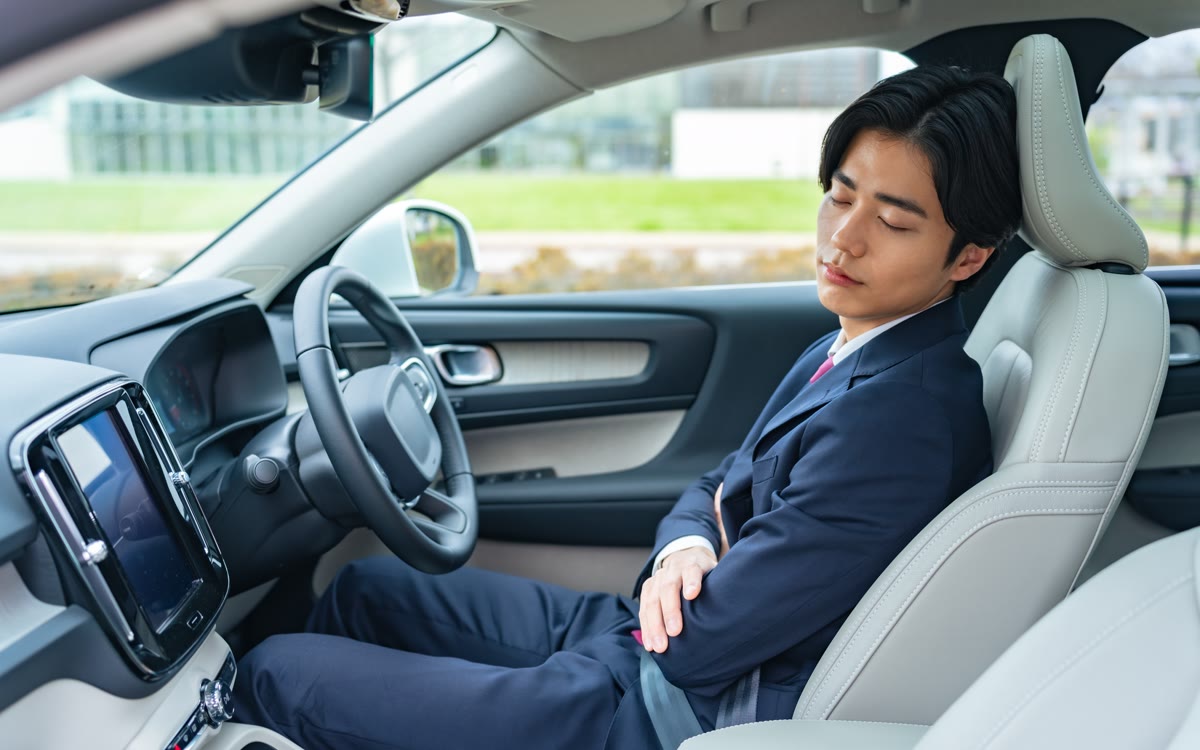
It applies directly, and means that the technology will not help anyone get off the hook of an OWI. Starting the vehicle and programming a destination both count as “operating” the car under Wisconsin law, even if the car handles all the steering, braking, and acceleration from that point forward.
While you may think using the autopilot or self-driving feature on your car after a couple of drinks is the smart, responsible choice. It certainly may feel that way. But under Wisconsin law, it is not a safe, legal choice. You are still at risk of an Operating While Intoxicated charge, along with everything else that comes with it. The best choice is still the simplest one: do not get behind the wheel, self-driving or not, after you have been drinking.
So the next time you’re at a cocktail party, and hear someone ask about the My Car was Driving Defense, you can expertly tell them three things –
- Wisconsin law punishes “operating” a vehicle, not just driving one.
- Wisconsin courts have said a car does not even need to move for that to count as “operating.”
- In Wisconsin, turning ON a self-driving system while intoxicated does not erase your legal responsibility. It may actually help prove the state’s case against you instead.
Charged With an OWI in Wisconsin? Talk to Mays Law Office.
If you have been charged with an OWI offense, whether you were behind the wheel of a traditional car or in the driver’s seat of a Tesla using FSD, you need a team that understands the legal difference between “driving” and “operating.” Building a strong Wisconsin OWI defense means knowing exactly how the state plans to prove operation and knowing how the OWI laws hold up against new technology.
This is where the Wisconsin OWI defense team at Mays Law Office comes in. We handle the complexities of OWI defense in Wisconsin every day, and we know how to challenge the state’s evidence at every stage of your case. Contact Mays Law Office today to talk with a Wisconsin OWI defense attorney about your situation.
This article provides general legal information and is not legal advice. Reading it does not create an attorney-client relationship. Laws change and every case turns on its specific facts. Consult a licensed Wisconsin attorney about your situation.